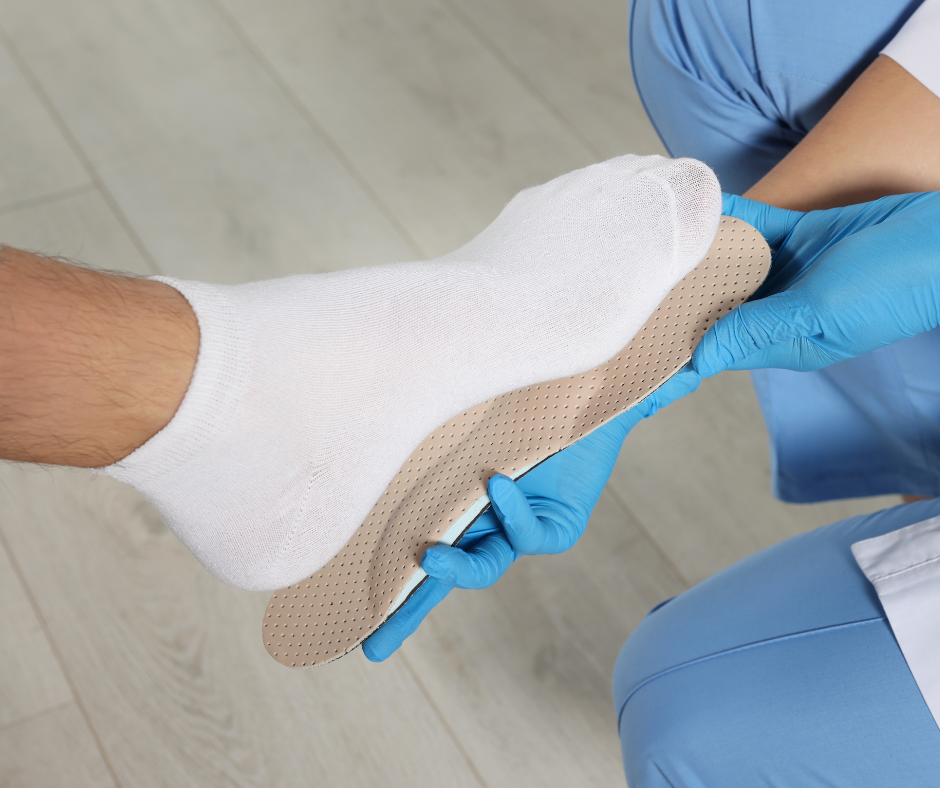
“Do I Need Custom Orthotics?”
When your feet hurt, you start searching for answers. You might type “sharp heel pain in the morning” or “best shoes for flat feet” into Google. You try stretching, icing, and maybe even buying expensive “supportive” sneakers. But often, the pain returns.
Why? Because you are treating the symptoms, not the structure.
At our practice, we specialize in biomechanics. We know that chronic pain is often a sign that your foot needs a better foundation. Whether it’s a custom insert, a specialized shoe, or a supportive brace, the right medical device can change your life for the better. In this blog, Foot & Ankle Center of Ohio explains them all.
The “Big 3” Solutions
We offer three distinct types of custom support. Here is how to tell which one might be right for you based on your symptoms.
1. Custom Foot Orthotics (The “Realignment” Tool)
These are prescription medical inserts that replace the factory insole of your shoe. Unlike store-bought gel pads, they are built from a 3D mold of your foot.
- Best For:
- Plantar Fasciitis: If you have sharp morning heel pain.
- Flat Feet/High Arches: Correcting the collapse (overpronation) that strains your ankles.
- Bunions & Hammertoes: Slowing the deformities by stabilizing the joint.
- The Benefit: They don’t just cushion; they correct. They align your foot into its optimal neutral position, taking the strain off your tendons with every step.
2. Diabetic Shoes (The “Protection” Tool)
For patients with diabetes, a small blister can become a major health threat. Diabetic shoes are extra-depth, seamless, and designed to prevent friction.
- Best For:
- Diabetic Neuropathy: If you have numbness or tingling and can’t feel cuts.
- Prevention: Stopping ulcers and calluses before they start.
- The Benefit: Many insurance plans (including Medicare) cover these annually because they are essential for limb preservation.
3. Ankle-Foot Orthoses (AFOs) (The “Stability” Tool)
An AFO is a brace that supports both the foot and the ankle. It provides more rigid control than a shoe insert alone.
- Best For:
- Foot Drop: Difficulty lifting the front of your foot when walking.
- Severe Arthritis: Reducing motion in painful joints.
- Chronic Instability: If your ankle constantly “gives way” or rolls.
- The Benefit: It restores confidence. By mechanically lifting or stabilizing the foot, an AFO allows patients to walk safely without fear of falling.
Frequently Asked Questions
“Are they covered by insurance?”
- Many plans cover custom devices when medically necessary, and HSA/FSA funds are often applicable. We can check your specific benefits for orthotics or diabetic shoes.
“How long do they last?”
- Custom orthotics typically last 1–2 years. They’re made from durable, medical-grade materials, so they outlast drugstore inserts by a wide margin.
“Can I wear them in normal shoes?”
- Yes! Modern orthotics are low-profile, fitting in most sneakers and shoes. AFOs may require a shoe with extra width, but we can guide you on the best footwear choices.
Stop Guessing with Your Stride
If you are tired of buying shoes that don’t fix the problem, it’s time to look at the customized approach. Schedule an evaluation today. We’ll perform a gait analysis, take 3D images of your feet, and build the support system you need.
For trusted podiatric experts, choose Foot & Ankle Center of Ohio! With advanced techniques, proven skills, and a stress-free environment, our team can resolve your foot and ankle problems and help you return to living your best life. Step past pain and schedule your appointment today.