Is It Just “Growing Pains” or Sever’s Disease?
A Parent’s Guide to Heel Pain
You are driving home from soccer practice or a basketball tournament. Your child played hard, but now that the adrenaline has worn off, you notice they are limping. When you ask about it, they point to their heel.
“It’s probably just growing pains,” the coach says.
But is it?
As podiatrists, we are seeing a massive spike in pediatric heel pain. This increase correlates directly with the rise of Year-Round Sports Specialization. Kids are playing harder, with fewer rest days, during their most critical growth windows.
While “growing pains” are real, heel pain in an active child is almost always a specific medical condition called Sever’s Disease (Calcaneal Apophysitis). And unlike generic growing pains, it requires treatment. In the following blog, the Foot & Ankle Center of Ohio explains it all!
The “Tug-of-War” in Your Child’s Foot
To understand Sever’s, you have to understand the teenage growth spurt.
- The Imbalance: During a growth spurt, bones often grow faster than muscles and tendons.
- The Tension: The heel bone (calcaneus) elongates, pulling the Achilles tendon tight like a guitar string.
- The Injury: When your child runs or jumps, the tight Achilles pulls violently on the growth plate at the back of the heel. This repetitive traction causes inflammation and micro-trauma.
The “Squeeze Test”: How to Tell the Difference
Parents often confuse Sever’s with “Growing Pains.” Here is the cheat sheet to tell them apart:
1. Location
- Growing Pains: Usually felt in the thighs, calves, or behind the knees.
- Sever’s Disease: Felt specifically at the back of the heel.
2. Timing
- Growing Pains: Typically happen at night (sometimes waking the child up) but resolve by morning.
- Sever’s Disease: Worse during or after physical activity. It hurts to run, but it feels better after rest.
3. The Squeeze Test
- If you gently squeeze the sides of your child’s heel bone and they flinch or pull away in pain, that is the classic sign of Sever’s Disease.
The “Travel Team” Factor
Why is this happening now?
Decades ago, kids played soccer in the fall and baseball in the spring, with rest in between. Today, Travel Teams and Specialization mean kids are using the same muscle groups for repetitive motions 12 months a year on hard surfaces (turf, hardwood).
This lack of “off-season” means the growth plate never gets a chance to cool down.
Treatment: Do They Have to Quit?
The biggest fear for parents (and kids) is being benched. The good news? Sever’s Disease rarely requires quitting sports completely. Rather, it requires management.
- The “Ramp Down”: We may need to reduce practice intensity for a few weeks, but total bed rest is rarely the answer.
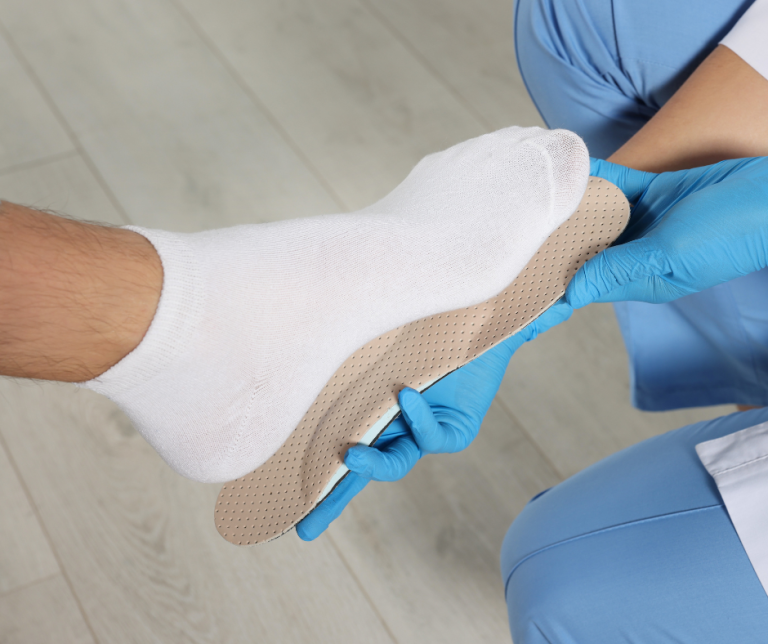
- Mechanical Help: We often prescribe Heel Cups or Custom Orthotics. These lift the heel slightly, shortening the distance the Achilles has to travel. This creates instant slack on the “rope,” relieving the tension on the growth plate.
- Stretching: Targeted calf stretching (done correctly!) helps the muscle catch up to the bone growth.
Protect Their Future Season
Sever’s Disease is self-limiting (it goes away when the growth plate closes), but that can take years. Ignoring it can lead to chronic pain and an altered gait that causes knee and hip issues.
If your young athlete is walking on their tiptoes to avoid heel pain or limping after every game, bring them in. We can help them play through their growth spurt comfortably!
For trusted podiatric experts, choose Foot & Ankle Center of Ohio! With advanced techniques, proven skills, and a stress-free environment, our team can resolve your foot and ankle problems and help you return to living your best life. Step past pain and schedule your appointment today.